
Leadership & Governance
- Home
- Leadership
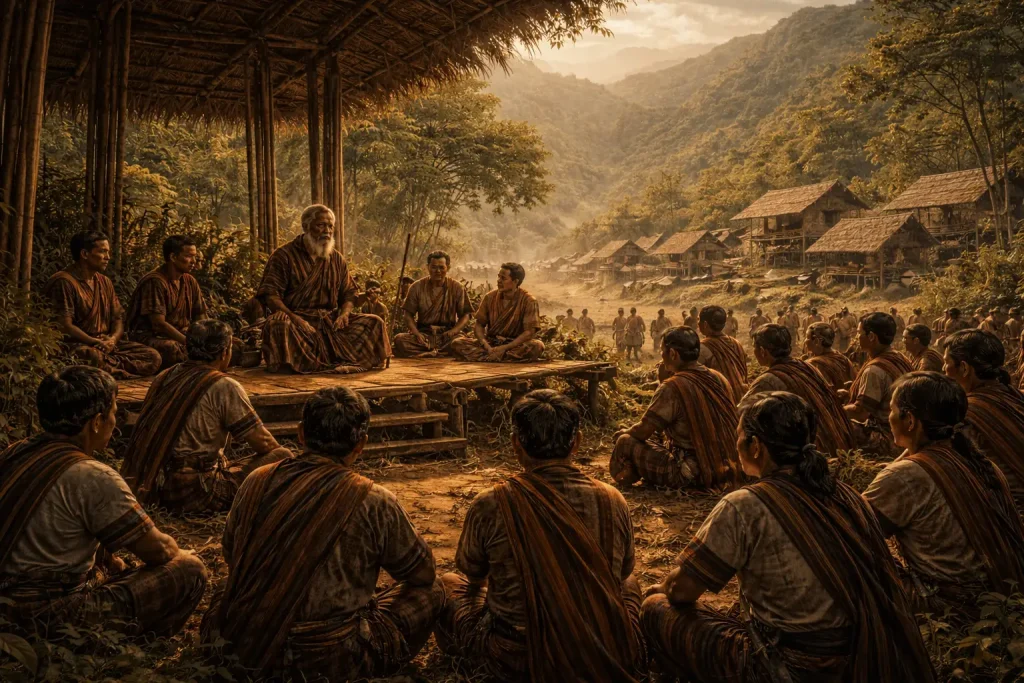
Traditional Mizo Governance System
Chieftainship Authority
The Mizo governance system was centered around the village chief, who held administrative, judicial, and military authority. Leadership was hereditary, but legitimacy depended on wisdom, bravery, and the ability to protect and provide for the community. The chief symbolized unity and stability within the village structure.
Village Council System
Alongside the chief, respected elders and advisors formed a council that assisted in decision-making. Important matters such as disputes, alliances, and defense strategies were discussed collectively. This consultative approach ensured balance between authority and communal participation.
Communal Land Management
Land was considered a shared resource managed for collective benefit. The chief supervised agricultural allocation, ensuring equitable distribution among families. This practice strengthened unity and minimized internal conflict over resources.
Customary Law & Justice
Justice was administered through customary laws passed down orally across generations. Disputes were settled publicly, emphasizing fairness, restitution, and social harmony rather than punishment alone. The system reinforced moral accountability within the tribe.
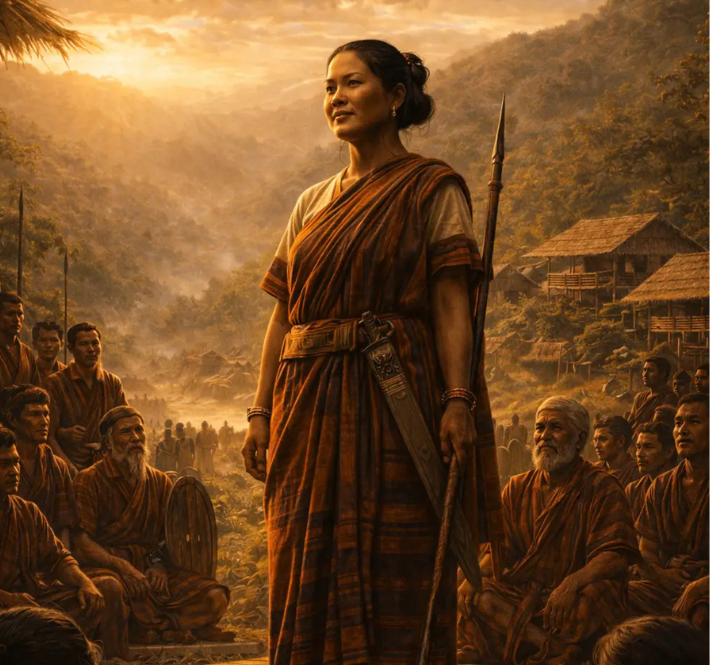
Ropuiliani
Role as a Woman Leader
Fearless Matriarch
In a time when leadership structures were predominantly male-led, Ropuiliani emerged as a commanding and respected figure within Mizo society. Her authority was not defined solely by lineage but by her wisdom, resilience, and unwavering courage. She demonstrated that strength in leadership transcends gender, earning loyalty through conviction, fairness, and deep cultural understanding.
As colonial pressures intensified, she stood at the forefront of resistance, guiding her people with clarity and determination. Her presence in councils and strategic decisions challenged conventional expectations, reinforcing that women could shape political and military direction. She embodied dignity under pressure, proving that leadership is rooted in moral strength and responsibility.
Beyond resistance, her role carried symbolic power. She became a source of inspiration for women within her community, redefining participation in governance and defense. Her legacy represents empowerment, courage, and the enduring impact of women who lead with integrity and vision in times of crisis.
Community Unity & Decision-Making

Collective Leadership
Decisions within Mizo society were rarely made in isolation. Chiefs consulted elders, warriors, and respected community members before taking action. This collective approach ensured that leadership reflected shared wisdom and strengthened trust between authority and the people.

Consensus Building
Important matters—ranging from defense strategies to resource allocation—were discussed openly. Through dialogue and mutual respect, the community worked toward consensus rather than conflict, reinforcing social harmony and unified direction during critical times.

Shared Responsibility
Every member of the village played a role in maintaining order and security. Whether through agriculture, defense, or cultural duties, participation fostered accountability and deepened the sense of belonging within the tribal structure.

Strength in Solidarity
Unity became the foundation of resilience during external threats. Standing together under trusted leadership, the community transformed individual courage into collective strength, preserving sovereignty and cultural identity through cooperation and unwavering solidarity.