
Legacy & Regional Recognition
- Home
- Legacy
Legacy & Regional Recognition
Enduring Symbol
Ropuiliani remains a powerful symbol of courage and sovereignty in Mizo history. Her steadfast resistance against colonial authority transformed her into an enduring icon of dignity .
Regional Honor
Across Mizoram and neighboring regions, her name is remembered with respect and pride. She is recognized as one of the prominent figures who stood firm during a critical chapte.
Cultural Memory
Her story lives on through oral traditions, community narratives, and historical remembrance. Generations continue to honor her contributions as part of the broader .
Women’s Empowerment
Ropuiliani’s leadership reshaped perceptions of women in positions of authority. She stands as a regional example of strength, resilience, and the transformative role .
Educational Recognition
Her life and resistance are increasingly acknowledged in historical discussions and educational contexts, reinforcing her importance in understanding the colonial-era.
Regional Honor
Across Mizoram and neighboring regions, her name is remembered with respect and pride. She is recognized as one of the prominent figures who stood firm during a critical chapte.
Cultural & Regional Honors
Public Remembrance
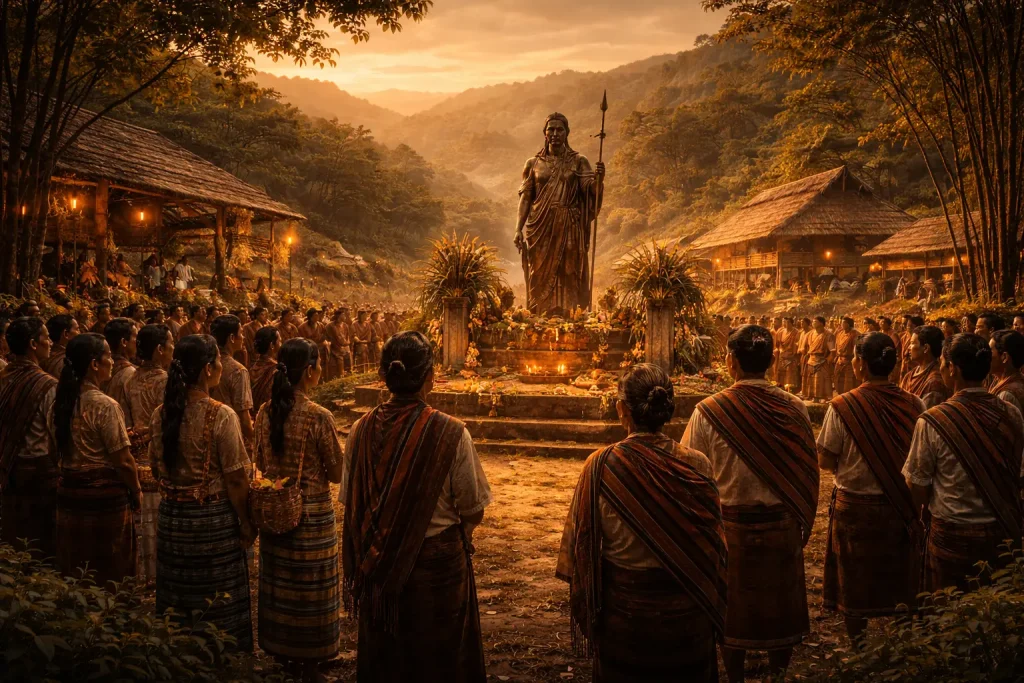
Ropuiliani is remembered in community gatherings, regional discussions, and cultural programs that honor her contribution to Mizo resistance history. Her name continues to be spoken with pride and respect across Mizoram.
Historical Recognition
Her role in resisting colonial authority has secured her place in regional historical narratives. Scholars and educators acknowledge her leadership as an important chapter in the broader story of Northeast India’s resistance movements.
Cultural Celebrations
Traditional events and heritage-focused activities often reflect on figures like Ropuiliani who defended identity and sovereignty. These celebrations reinforce collective memory and preserve the values she stood for.
Symbol of Empowerment
Ropuiliani is honored as a powerful example of female leadership in a challenging era. Her courage and determination continue to inspire discussions about women’s strength, resilience, and contribution to society.
Memorials & Commemorations
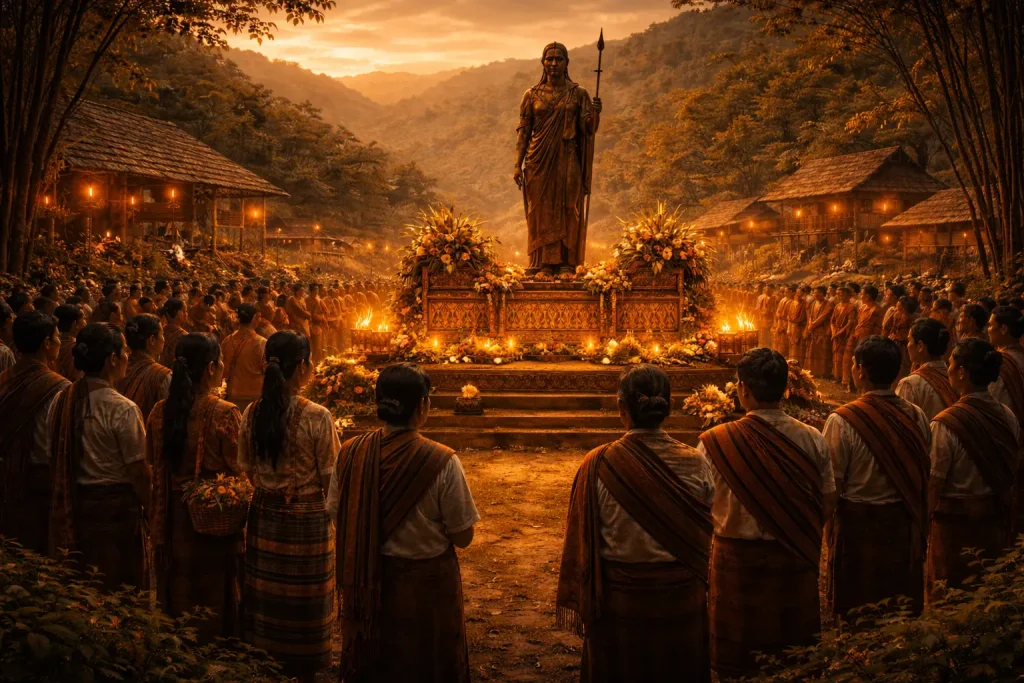
Ropuiliani’s legacy is honored through acts of remembrance that reflect gratitude, pride, and cultural reverence. Memorial gatherings and regional observances serve as powerful reminders of her courage and sacrifice during a defining era in Mizo history. These commemorations are not merely ceremonial—they reaffirm collective memory and identity.
Across Mizoram, her story continues to be remembered in public discussions, cultural programs, and heritage-focused initiatives. Such events bring communities together to reflect on the values she embodied: sovereignty, dignity, and unwavering resolve. Through remembrance, her life becomes a bridge between past struggles and present identity.
Memorials & Commemorations
Ropuiliani occupies a significant place in the broader narrative of resistance movements across Northeast India. During the nineteenth century, various indigenous communities in the region confronted expanding colonial authority in different forms—through organized uprisings, localized defiance, and sustained assertion of traditional autonomy. Within this historical landscape, the resistance in the Lushai Hills stands as an important chapter, reflecting the determination of tribal societies to defend their sovereignty. Ropuiliani’s leadership emerged during a time when colonial expeditions sought to consolidate control over frontier regions. Her refusal to submit to British authority positioned her among the notable figures who embodied indigenous resistance in the Northeast.
Unlike large-scale rebellions that drew widespread military confrontation, resistance in the Lushai Hills was deeply rooted in community-based leadership and cultural defense. It was characterized by the protection of customary governance, communal land rights, and ancestral identity. Ropuiliani’s stand symbolized more than opposition to political rule—it represented the assertion of indigenous dignity in the face of systemic transformation. Her imprisonment marked a turning point, highlighting the lengths to which colonial administration would go to suppress defiance. Yet, rather than diminishing her influence, her sacrifice reinforced the narrative of resilience that defined many movements across the Northeast.
In the wider context of India’s freedom struggle, regional resistance movements often operated independently yet shared a common spirit of autonomy and cultural preservation. Leaders from tribal societies contributed uniquely to this history by defending localized systems of governance and identity. Ropuiliani’s legacy aligns with this broader pattern of indigenous assertion that shaped the region’s historical consciousness. Today, her story forms part of Northeast India’s collective memory of resistance—an enduring reminder that the freedom movement was not confined to a single geography or strategy. Her place in history underscores the diversity of India’s struggle for self-determination and highlights the essential contributions of tribal leadership in safeguarding regional identity and sovereignty.